Quick Answer
Allergy symptoms are caused by the immune system overreacting to harmless substances called allergens. The most common symptoms are sneezing, runny nose, itchy and watery eyes, nasal congestion, and skin hives. Severe reactions can escalate to anaphylaxis — a life-threatening emergency requiring immediate epinephrine and 911.
Key Takeaways
- Sneezing, rhinorrhea, congestion, and itchy eyes are the most common symptoms — all caused by histamine release from mast cells
- Allergy symptoms appear rapidly after allergen exposure; cold symptoms develop gradually over 1–3 days
- Skin manifestations include hives (urticaria), eczema (atopic dermatitis), and allergic contact dermatitis
- Anaphylaxis is a life-threatening multi-system reaction requiring immediate epinephrine — not antihistamines alone
- Chronic allergic disease causes fatigue, sleep disruption, and cognitive impairment in many patients
- Diagnosis is confirmed by skin prick testing or specific IgE blood testing by a board-certified allergist
- Treatment ranges from OTC antihistamines and nasal corticosteroids to allergen immunotherapy for disease modification
Allergy Prevalence — Key Statistics (ACAAI / CDC 2024)
32M+
Americans with food allergies
(FARE 2024)
81M
US adults with seasonal allergic rhinitis
(AAAAI 2023)
10%
of the global population has asthma
(WHO 2024)
1 in 50
Americans at risk for anaphylaxis
(ACAAI 2024)
$18B
annual US cost of allergy treatment
(NIH 2023)
40%
of children worldwide have allergic disease
(WAO 2024)
How Your Immune System Triggers an Allergic Reaction
Systemic vs. Localized Allergy Symptoms
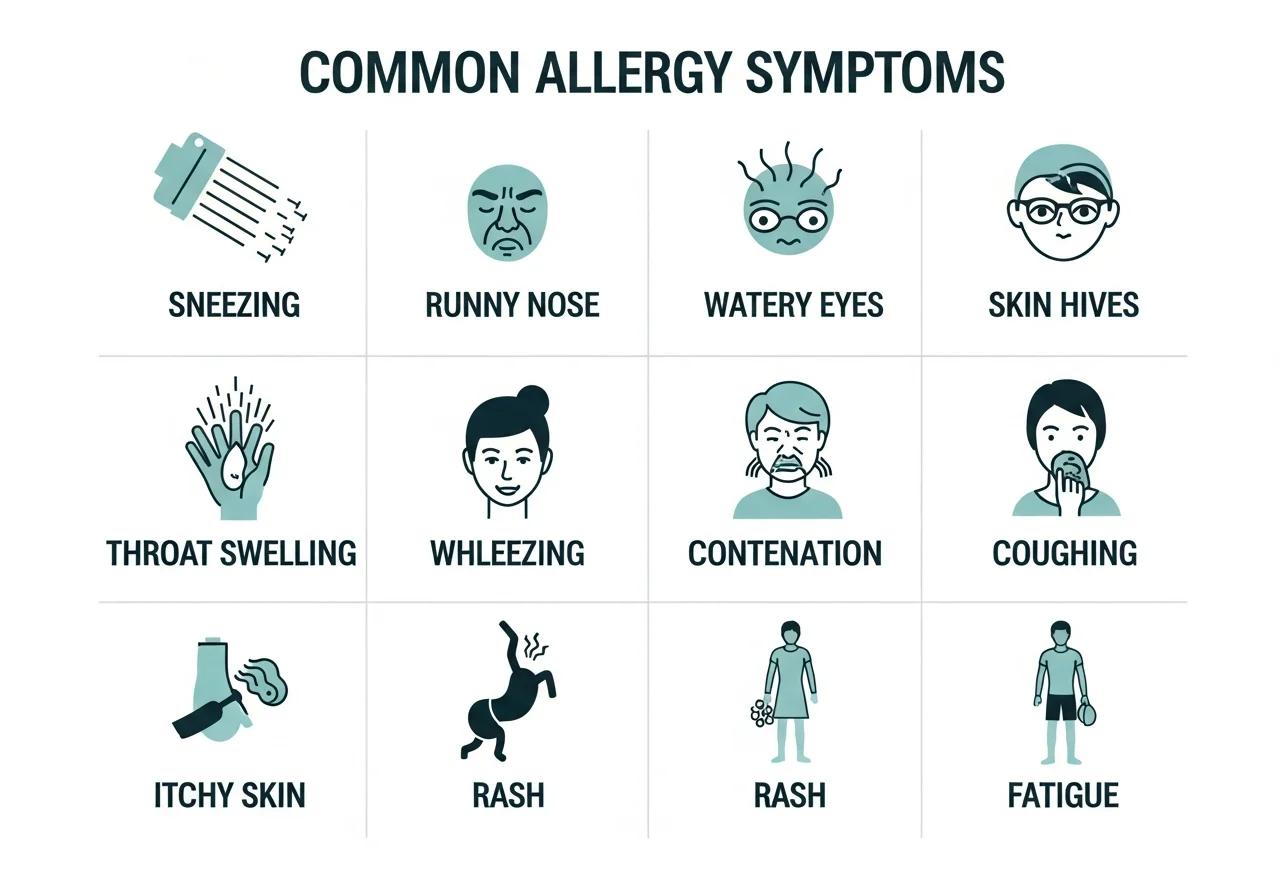
Allergic reactions can be classified as either localized (affecting a specific area like the nose or a patch of skin) or systemic (affecting the entire body, such as anaphylaxis). Identifying the scope of the symptom is critical for appropriate medical response. Understanding your symptoms is the essential first step before pursuing formal allergy testing.
Respiratory Symptoms
Respiratory allergy symptoms are the most commonly presented type, particularly in those with seasonal allergic rhinitis (hay fever). Key presentations include:
- Rhinorrhea: Clear, thin nasal discharge — a hallmark distinguishing allergies from colds (which produce thick, discolored mucus).
- Sneezing Paroxysms: Rapid, continuous sneezing fits triggered by inhalation of pollen, dust mite particles, or mold spores.
- Nasal Congestion: Chronic obstruction due to mucosal inflammation — distinct from infectious congestion.
- Bronchospasm (Allergic Asthma): Constriction of airways leading to wheezing and shortness of breath. Inhaled corticosteroids and bronchodilators are first-line management.
- Conjunctivitis: Itchy, red, and watery eyes caused by direct allergen contact with the conjunctival mucosa.
Skin Allergy Symptoms
Skin is the largest organ and a primary site of allergic manifestation. Skin allergy conditions span a spectrum from acute hives to chronic inflammatory diseases:
- Urticaria (Hives): Raised, itchy, red welts (wheals) that can appear anywhere on the body. When persisting over 6 weeks, the condition is classified as chronic urticaria and warrants specialist evaluation.
- Atopic Dermatitis (Eczema): Chronic, relapsing-remitting inflammatory skin disease characterized by intense pruritus (itching) and eczematous lesions. Our comprehensive atopic dermatitis management guide covers the latest biologic treatments.
- Allergic Contact Dermatitis: A Type IV (delayed-type) hypersensitivity reaction occurring 24–72 hours after skin contact with a trigger like nickel, fragrance, or latex.
- Angioedema: Deep swelling beneath the skin, often occurring with hives. Swelling of the throat is a sign of severe, potentially life-threatening anaphylaxis.
Gastrointestinal Symptoms
Food allergy reactions often manifest in the gastrointestinal tract. Key GI symptoms include nausea, vomiting, abdominal cramping, and diarrhea. These differ from food intolerances in that they involve an immune response and can escalate to systemic anaphylaxis.
Anaphylaxis: The Systemic Emergency
Anaphylaxis is a severe, multi-system, life-threatening reaction requiring immediate epinephrine administration. Symptoms typically include a combination of skin reactions (hives, flushing), respiratory distress (wheezing, throat swelling), and cardiovascular collapse (low blood pressure, rapid pulse). Our dedicated anaphylaxis emergency guide and emergency action plan template are essential reading for all allergy patients.
Seek Emergency Care for These Symptoms
Seek medical attention if you experience:
- Sudden throat tightening or voice changes after allergen exposure
- Wheezing, stridor, or difficulty breathing at rest
- Dizziness, near-fainting, or rapid weak pulse
- Hives covering a large area combined with any respiratory symptoms
- Severe abdominal pain or vomiting immediately following food ingestion
Symptom Patterns by Allergen Type
| Allergen Type | Primary Symptoms | Anaphylaxis Risk |
|---|---|---|
| Airborne pollen | Sneezing, congestion, watery eyes | Low |
| Food (peanuts, shellfish) | GI upset, hives, systemic | High |
| Contact allergens (nickel) | Localized rash, blistering | Very Low |
| Latex | Contact urticaria, respiratory | Moderate–High |
| Insect stings | Local swelling, systemic reaction | Moderate–High |
Allergy Reaction Severity Scale — Clinical Classification
Mild
Runny nose, sneezing
Moderate
Hives, nasal congestion, itchy eyes
Severe
Asthma flare, widespread hives, swelling
Anaphylaxis
Throat closure, hypotension, shock
⚠ Anaphylaxis = Medical Emergency. Administer epinephrine immediately. Call 911.
Allergy Symptom Self-Assessment Checklist
- Do symptoms occur at the same time each year or in specific locations?
- Do symptoms improve significantly on rainy days or when away from home?
- Do symptoms appear within minutes of eating a specific food?
- Have you ever had throat swelling, difficulty breathing, or near-fainting after allergen exposure?
- Do symptoms improve with antihistamines but return when you stop?
- Do you have a first-degree relative with allergies, asthma, or eczema?
When to See a Specialist
Any symptom pattern that interferes with daily function, requires regular medication, or has ever included difficulty breathing should prompt referral to a board-certified allergist. Follow our allergy diagnosis timeline to understand what to expect from your first specialist appointment, and review our allergy testing methods guide to prepare for your tests.