This article is part of our Food Allergies resource center, covering all aspects of food allergies diagnosis, treatment, and management.
Allergy Reaction Severity Scale — Clinical Classification
Mild
Runny nose, sneezing
Moderate
Hives, nasal congestion, itchy eyes
Severe
Asthma flare, widespread hives, swelling
Anaphylaxis
Throat closure, hypotension, shock
⚠ Anaphylaxis = Medical Emergency. Administer epinephrine immediately. Call 911.
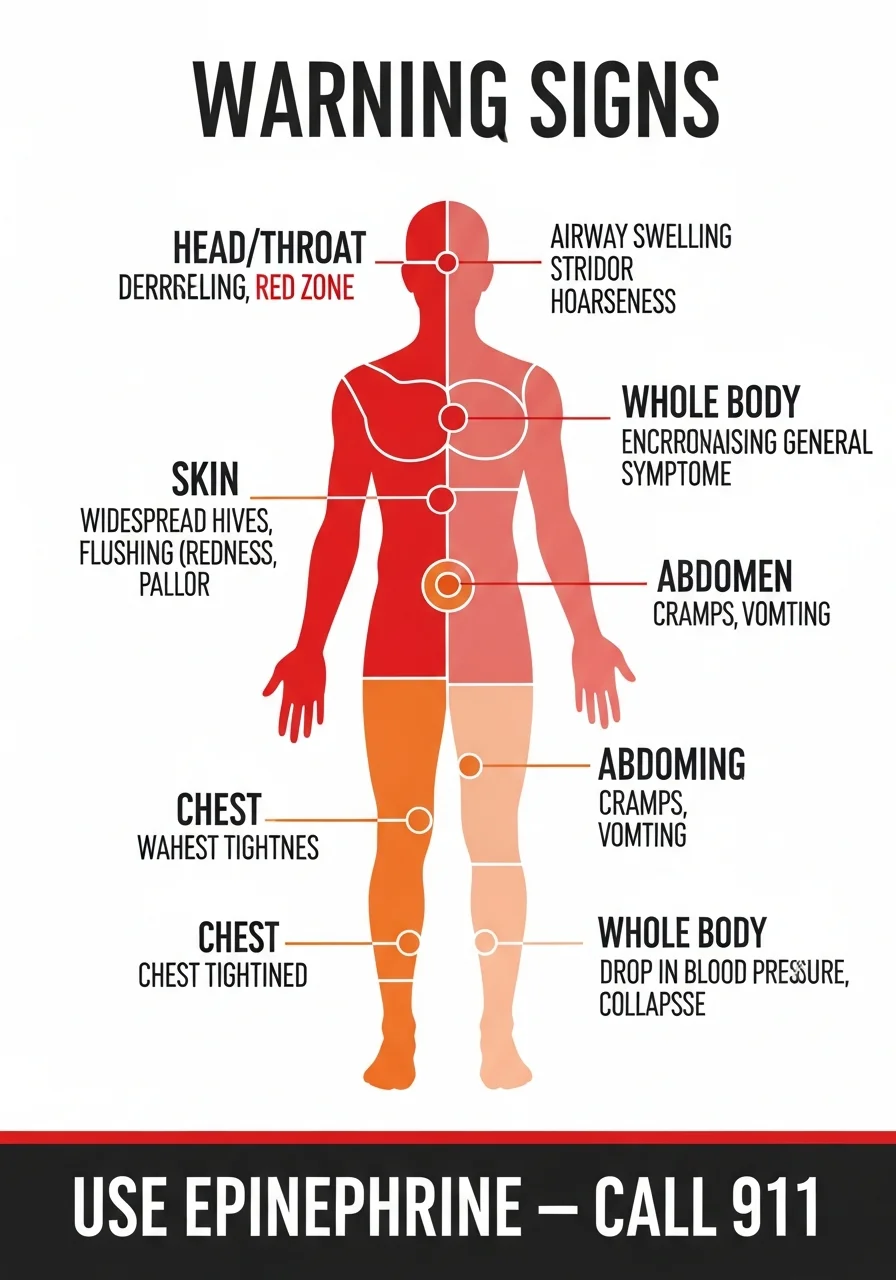
Understanding Anaphylaxis
Anaphylaxis is a medical emergency that requires immediate treatment. It occurs when the immune system overreacts to an allergen, releasing a flood of chemicals that can cause you to go into shock. Blood pressure drops suddenly, and your airways narrow, blocking normal breathing.
Common triggers include certain foods (like peanuts, tree nuts, fish, shellfish, and milk), insect stings, medications, and latex. In some cases, the cause remains unknown (idiopathic anaphylaxis).
Call 911 Immediately — These Symptoms Signal Anaphylaxis
Call 911 immediately if you experience:
- Throat tightening, difficulty swallowing, or voice changes
- Wheezing, shortness of breath, or inability to speak in full sentences
- Sudden drop in blood pressure — dizziness, fainting, or collapse
- Rapid weak pulse combined with pale or bluish skin
- Severe vomiting or diarrhea following allergen exposure
- Swollen lips, tongue, or face — especially with respiratory symptoms
- Feeling of "impending doom" — take this symptom seriously
Recognizing the Symptoms
Symptoms usually appear within minutes of exposure to an allergen, but sometimes they can occur a half-hour or longer after exposure. Key signs include:
- Skin reactions, including hives and itching, and flushed or pale skin
- A feeling of warmth or a sudden feeling of being too warm
- The feeling of a lump in your throat or difficulty swallowing
- Nausea, vomiting, or diarrhea
- Abdominal pain
- A weak and rapid pulse
- Runny nose and sneezing
- Swollen tongue or lips
- Wheezing or difficulty breathing
- A sense that something is wrong, or a feeling of impending doom
Medical Emergency Protocol
Anaphylaxis Emergency Action Protocol
Follow these steps in order — do not delay any step:
Administer Epinephrine Auto-Injector
Do this firstUse an EpiPen or Auvi-Q immediately. Inject into the outer mid-thigh — through clothing is acceptable. Hold in place for 10 seconds.
Call 911
Immediately after step 1Call emergency services immediately after administering epinephrine. State clearly: 'This person is having anaphylaxis.' Do not drive yourself to the hospital.
Position the Patient
While waiting for 911Lay the person flat on their back. Raise their legs 12 inches if possible. If vomiting or breathing difficulty, allow them to sit up slightly or lie on their side.
Second Epinephrine Dose (if available)
5–15 minutes after first doseIf symptoms do not improve within 5–15 minutes and a second auto-injector is available, administer it in the opposite thigh.
Hospital Evaluation — Mandatory
Always requiredEven if symptoms resolve after epinephrine, a biphasic reaction can occur 1–72 hours later. Emergency department evaluation is required after every anaphylactic episode.
Important: Antihistamines (Benadryl) do NOT treat anaphylaxis. Epinephrine is the only first-line treatment. Never substitute or delay epinephrine.
| Symptom Category | Specific Signs | Urgency Level |
|---|---|---|
| Respiratory | Shortness of breath, wheezing, throat tightness | Critical - Treat Immediately |
| Cardiovascular | Pale/blue coloring, weak pulse, dizziness, passing out | Critical - Treat Immediately |
| Skin/Mucosal | Hives, swelling (lips/face), itching | High - Monitor Closely |
| Gastrointestinal | Vomiting, severe cramps, diarrhea | High - Monitor Closely |
Anaphylaxis Preparedness Checklist — For Patients at Risk
- Carry two unexpired epinephrine auto-injectors at all times
- Wear a medical alert bracelet or necklace identifying your allergy
- Have a written, signed anaphylaxis action plan from your allergist
- Educate family, friends, caregivers, and coworkers on recognition and auto-injector use
- Avoid known trigger foods/substances — always read ingredient labels
- Schedule annual follow-up with allergist to review triggers and action plan
Prevention and Preparedness
The best way to prevent anaphylaxis is to avoid known allergens. If you have a history of severe allergic reactions, always carry two doses of prescribed epinephrine per your allergy treatment plan. Ensure that family, friends, and coworkers know how to recognize anaphylaxis symptoms and use the auto-injector.
Consider wearing a medical alert bracelet or necklace indicating your allergy to inform first responders in an emergency.