This article is part of our Seasonal Allergies resource center, covering all aspects of seasonal allergies diagnosis, treatment, and management.
The Hidden Triggers Inside Your Home
Many people associate allergies with the outdoors and pollen, but indoor allergens can cause year-round allergy symptoms. Indoor air quality significantly impacts the health of individuals with allergic rhinitis and allergic asthma. Understanding and managing these indoor triggers is essential for long-term allergy treatment and symptom relief.
Because people spend up to 90% of their time indoors, reducing exposure to indoor allergens is a critical component of environmental allergy management.
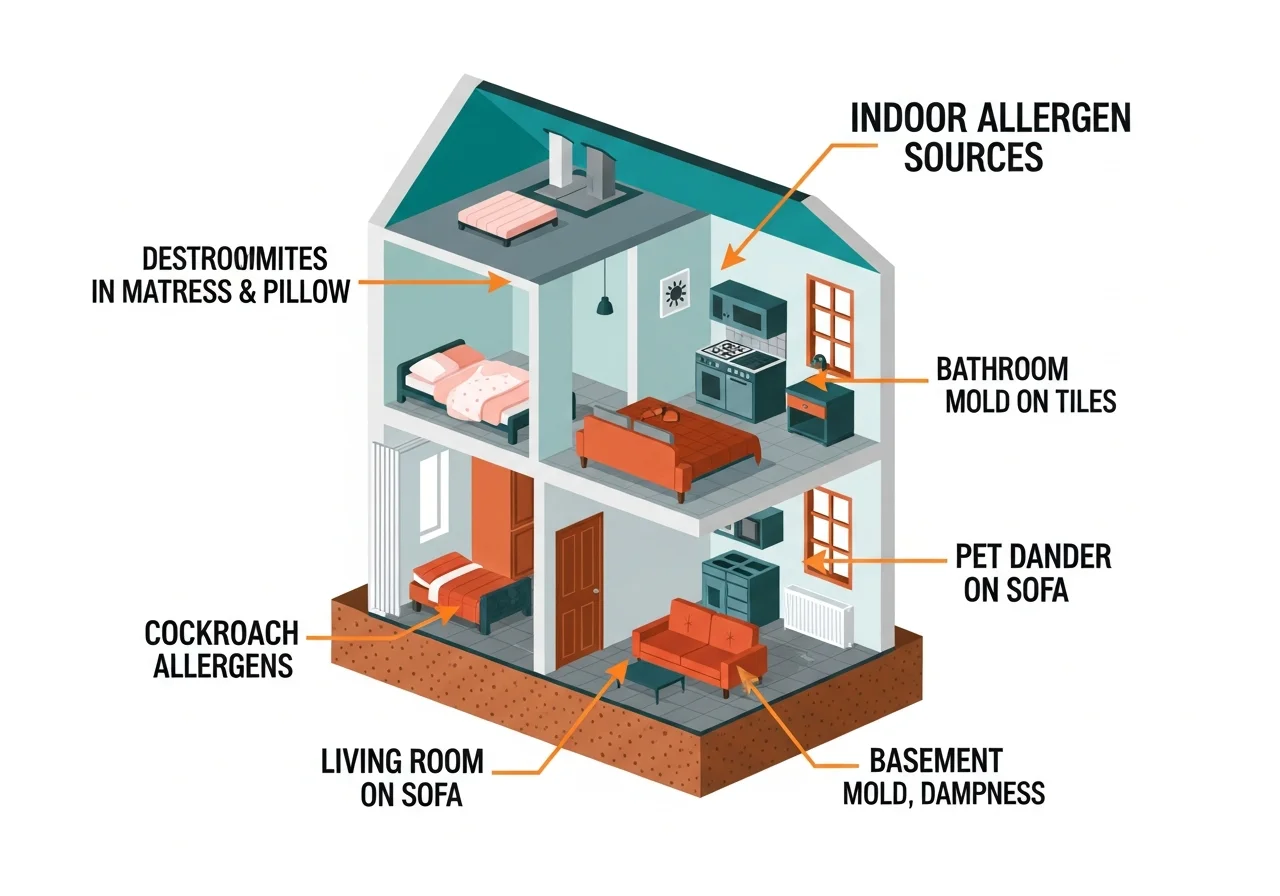
Primary Indoor Allergens
Several microscopic proteins can trigger an allergic response indoors. The most significant offenders include:
- Dust Mites: Microscopic organisms that thrive in warm, humid environments, primarily inhabiting bedding, upholstered furniture, and carpets.
- Pet Dander: Tiny flecks of skin shed by cats, dogs, rodents, and birds. Saliva and urine can also contain allergenic proteins.
- Mold: Fungi that grow in damp areas like bathrooms, basements, and around leaky pipes. Mold spores can become airborne and be inhaled.
- Cockroaches: Droppings, saliva, and body parts of cockroaches contain proteins that are potent allergens, particularly in urban environments.
Symptoms of Indoor Allergies
Unlike seasonal allergies, indoor allergies often present chronically throughout the year. Symptoms may be more pronounced immediately upon waking or after cleaning activities that disturb settled dust.
Common symptoms include nasal congestion, rhinorrhea (runny nose), sneezing paroxysms, ocular pruritus (itchy eyes), coughing, and wheezing or chest tightness in individuals with comorbid asthma.
| Allergen Source | Primary Locations | Mitigation Strategy |
|---|---|---|
| Dust Mites | Mattresses, pillows, carpets, stuffed toys | Allergen-proof encasements, wash bedding in hot water weekly. |
| Pet Dander | Airborne, carpets, furniture, clothing | Keep pets out of bedrooms, use HEPA air purifiers, frequent vacuuming. |
| Mold Spores | Bathrooms, basements, window sills, indoor plants | Reduce humidity <50%, fix leaks promptly, use exhaust fans. |
| Cockroaches | Kitchens, behind appliances, dark crevices | Store food in sealed containers, use professional extermination if needed. |
Improving Indoor Air Quality (IAQ)
Effective management of indoor allergens relies heavily on improving Indoor Air Quality. This multi-pronged approach involves source control, improved ventilation, and air cleaning.
Filtration: Utilizing High-Efficiency Particulate Air (HEPA) filters in HVAC systems and standalone air purifiers is clinically proven to reduce particulate matter load. Ensure vacuum cleaners also feature HEPA filtration to prevent aerosolizing settled allergens during cleaning.
Humidity Control: Dust mites and mold require moisture to survive. Maintaining indoor relative humidity between 30% and 50% using air conditioners and dehumidifiers is a highly effective environmental control measure.