This article is part of our Allergy Statistics resource center, covering all aspects of allergy statistics diagnosis, treatment, and management.
Quick Answer
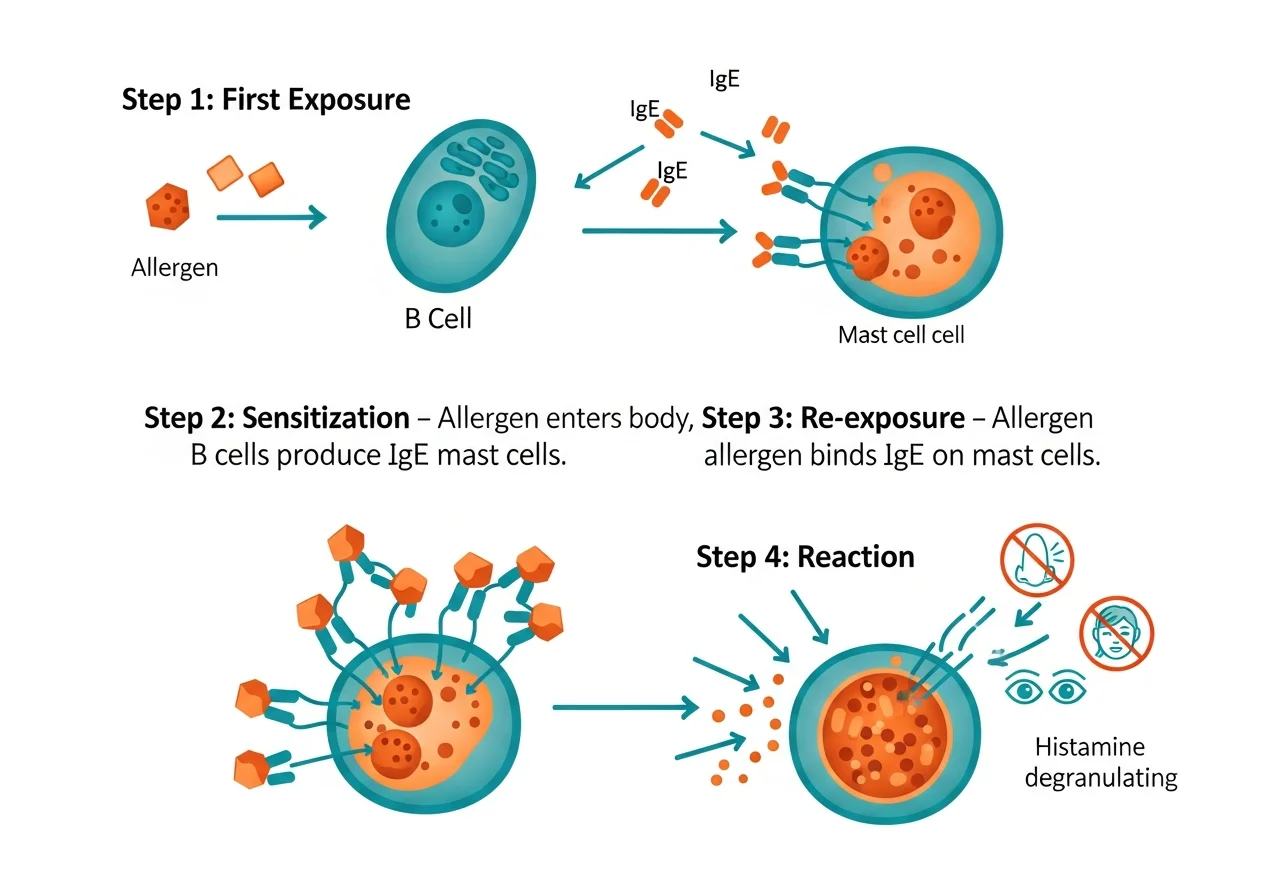
Approximately 25 million Americans have asthma; ~60% of cases are allergic asthma driven by IgE sensitization. Over 80% of asthma patients have concomitant allergic rhinitis. The total annual US economic burden of asthma is estimated at ~$81.9 billion. Asthma mortality has declined from its 1990s peak but remains approximately 4,100 deaths/year in the US. Allergic asthma accounts for the majority of pediatric asthma cases.
Key Statistics at a Glance
Asthma Prevalence by Demographics
| Population Group | US Asthma Prevalence | Notes |
|---|---|---|
| All US adults | ~7.1% | CDC NHIS 2021 |
| All US children | ~8.3% | CDC NHIS 2021 |
| Black Americans | ~10.9% | Highest prevalence ethnic group in US |
| Puerto Rican Americans | ~13.1% | Highest documented US subgroup prevalence |
| White Americans | ~7.3% | CDC/NHIS data |
| Hispanic Americans (overall) | ~6.2% | Heterogeneous — Puerto Rican vs Mexican American differ significantly |
| Women vs men (adults) | Women ~9.0% vs men ~6.3% | Sex reversal occurs at puberty (boys higher in childhood) |
| Low-income households | ~10%+ | Poverty linked to higher burden |
The Allergy-Asthma Relationship: Data Points
| Relationship | Data | Source |
|---|---|---|
| Rhinitis patients with asthma | 20–50% comorbidity rate | ARIA guidelines meta-analysis |
| Asthma patients with rhinitis | ~80–90% comorbidity rate | Unified airway disease studies |
| Childhood asthma that is allergic | ~80% of cases IgE-mediated | Sensitization testing in asthma cohorts |
| Asthma risk with sensitization to 3+ allergens | 3–5× higher risk vs monosensitized | Multiple birth cohort studies |
| Treating rhinitis → asthma improvement | ~20–30% reduction in asthma ER visits | Multiple observational and RCT data |
| Allergen immunotherapy → asthma prevention | ~40–50% reduction in new asthma development from rhinitis | Jensen et al., JACI 2018 meta-analysis |
Trend Analysis: Asthma Mortality Decline and Ongoing Disparities
One of the most significant public health successes in US respiratory medicine has been the sustained decline in asthma mortality since its peak of approximately 5,500 deaths/year in 1995. The widespread adoption of inhaled corticosteroids (ICS) as controller therapy, guided by the NAEPP Expert Panel guidelines, is credited with driving this mortality reduction. More recent data shows the rate of decline has slowed, and persistent mortality disparities remain — Black Americans die from asthma at approximately 2–3 times the rate of white Americans.
The allergy-asthma overlap creates opportunities for prevention: allergen immunotherapy has been shown in multiple prospective studies to reduce the progression of allergic rhinitis to asthma and to reduce asthma severity in sensitized patients. This preventive dimension is increasingly being captured in cost-effectiveness analyses that argue for broader immunotherapy access. For complete allergy treatment context, see our research center, global statistics, and main statistics hub.
Data Sources & Methodology Note
Primary sources: CDC National Health Interview Survey 2021 (asthma prevalence by demographics); CDC FastStats Asthma mortality data 2020; Barnett SBL and Nurmagambetov TA, JACI 2011 (economic burden — updated estimates from subsequent CDC analyses); WHO Global Asthma Report 2022 (global 262 million figure); Bousquet J et al., ARIA 2020 guidelines (rhinitis-asthma comorbidity); Johnsen CR, JACI 2018 (immunotherapy prevention meta-analysis). Racial/ethnic data from CDC Health Data Interactive.