This article is part of our Allergy Treatment resource center, covering all aspects of allergy treatment diagnosis, treatment, and management.
Quick Answer
Zyrtec (cetirizine) is generally preferred for routine daily allergy management. It provides 24-hour relief with only mild sedation risk. Benadryl (diphenhydramine) acts faster but causes significant drowsiness, cognitive impairment, and is not appropriate for daily use, driving, or use in older adults.
Key Takeaways
- →Benadryl is 1st-generation; Zyrtec is 2nd-generation — a clinically meaningful distinction
- →Benadryl causes significant sedation and anticholinergic side effects (dry mouth, urinary retention)
- →Zyrtec provides 24-hour coverage; Benadryl lasts only 4–6 hours per dose
- →Benadryl is contraindicated in older adults (AGS Beers Criteria) and should not be used while driving
- →Neither medication adequately treats nasal congestion — a nasal corticosteroid spray is better for that
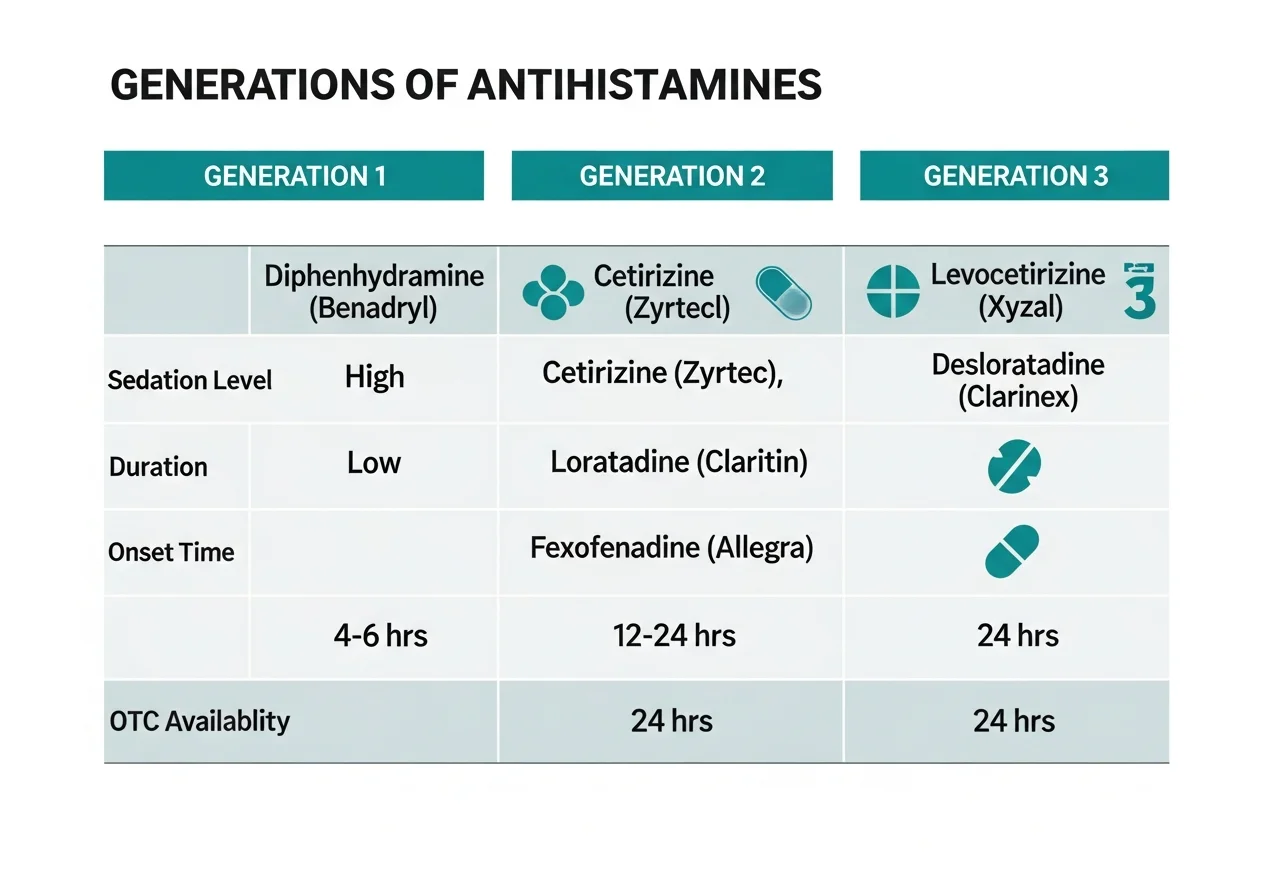
Understanding the Difference: Generations of Antihistamines
The single most important distinction between Benadryl and Zyrtec is their antihistamine generation. Diphenhydramine (Benadryl) is a first-generation antihistamine — it was developed in the 1940s and readily crosses the blood-brain barrier. This means it blocks histamine receptors not only in peripheral tissues (skin, nose, eyes) but also in the central nervous system, causing significant sedation and cognitive impairment.
Cetirizine (Zyrtec) is a second-generation antihistamine developed specifically to target peripheral H1 receptors while minimizing CNS penetration. It achieves comparable or superior antihistamine efficacy with dramatically reduced sedation. For most adults managing allergic rhinitis, urticaria, or other allergy symptoms, second-generation antihistamines are the preferred starting point per ACAAI and AAAAI clinical guidelines.
Head-to-Head Comparison Table
| Feature | Benadryl (Diphenhydramine) | Zyrtec (Cetirizine) |
|---|---|---|
| Generation | 1st generation | 2nd generation |
| Generic name | Diphenhydramine | Cetirizine HCl |
| Onset of action | 15–30 minutes | 1 hour |
| Duration | 4–6 hours | 24 hours |
| Dosing frequency | Every 4–6 hours (max 6/day) | Once daily |
| Sedation risk | High (>50% of users) | Low–Moderate (~10–15%) |
| Crosses blood-brain barrier | Yes — substantially | Minimally |
| Anticholinergic effects | Yes (dry mouth, urinary retention) | None significant |
| Safe for daily use | Not recommended | Yes |
| Safe for drivers | No — impairs reaction time | Generally yes (caution) |
| Safe for adults 65+ | No — Beers Criteria listed | Yes |
| Pediatric use | Not for under 2 (caution <12) | Approved 6 months+ |
| OTC availability | Yes | Yes |
| Average cost | Very low | Low–moderate |
Pros and Cons
Benadryl (Diphenhydramine)
Advantages
- • Fastest onset (15–30 min) — useful in acute reactions
- • Widely available, very inexpensive
- • Sedation may be useful in specific short-term situations
- • Available in IV/IM form for hospital use
Disadvantages
- • Significant drowsiness impairs driving and work
- • Only 4–6 hours duration — requires multiple daily doses
- • Anticholinergic effects: dry mouth, constipation, urinary retention
- • Not appropriate for older adults, children under 2, or daily use
- • Cognitive impairment and next-day "hangover"
Zyrtec (Cetirizine)
Advantages
- • Once-daily dosing for 24-hour allergy control
- • Well-suited for daily use and chronic allergy management
- • Safe for children as young as 6 months (age-appropriate dosing)
- • No anticholinergic effects
- • Generally safe for older adults
Disadvantages
- • Mild drowsiness in 10–15% of users — caution when driving
- • Slower onset (1 hour) than Benadryl
- • Some users report "stopping Zyrtec" rebound itch
- • More expensive than diphenhydramine generics
Who May Benefit from Each Medication
Situations Where Benadryl (Diphenhydramine) May Be Appropriate
Diphenhydramine is most clinically appropriate in specific acute situations: as an adjunctive therapy (never first-line) during an anaphylaxis hospitalization, for short-term management of acute hive flares, or as a pre-medication before procedures in hospital settings. Some providers use it for motion sickness or nausea. Its sedating property is sometimes utilized short-term for procedural anxiolysis in children. Importantly, diphenhydramine should not be the routine choice for managing ongoing seasonal or perennial allergy symptoms.
Situations Where Zyrtec (Cetirizine) Is Preferred
Cetirizine is appropriate for adults and children seeking daily allergy control for allergic rhinitis, allergic conjunctivitis, and urticaria. It is a common first-line recommendation in clinical allergy practice. Its 24-hour duration and minimal sedation make it practical for working adults and school-age children. For a broader comparison of antihistamine options, see our antihistamines comparison guide and Zyrtec vs Claritin vs Allegra comparison.
Side Effects in Detail
Diphenhydramine Side Effects
The side effect profile of diphenhydramine is substantially broader than cetirizine due to its CNS penetration and anticholinergic activity. Common effects include: sedation and impaired psychomotor performance, dry mouth and throat, blurred vision, urinary retention (especially in men with benign prostatic hyperplasia), constipation, tachycardia, and cognitive impairment. In older adults, these effects can be severe and contribute to falls, delirium, and functional decline. Chronic use of anticholinergic medications has been associated in observational studies with cognitive decline, though causality has not been established.
Cetirizine Side Effects
Cetirizine has a favorable side effect profile. The most common adverse effect is mild drowsiness, reported in approximately 10–15% of adults at the 10mg dose. Headache, dry mouth, and fatigue are occasionally reported. At standard doses, cetirizine does not produce the anticholinergic burden of first-generation antihistamines. For an expanded overview of allergy treatment options and how antihistamines fit within a broader treatment plan, see our treatment hub.
Safety Considerations
Older Adults
The American Geriatrics Society Beers Criteria explicitly lists diphenhydramine as a medication to avoid in adults aged 65 and older due to its anticholinergic burden and high risk of delirium, urinary retention, and falls. Cetirizine is generally considered safe in older adults, though starting at 5mg (half the standard dose) is sometimes suggested for those with renal impairment since cetirizine is renally excreted.
Pregnancy and Breastfeeding
Both diphenhydramine and cetirizine have been used during pregnancy and are classified as FDA Pregnancy Category B (no evidence of fetal risk in animal studies; no adequate human studies). Loratadine (Claritin) is often preferred during pregnancy due to the largest safety dataset. Neither antihistamine should be taken without consulting a healthcare provider during pregnancy. Both are detected in breast milk; diphenhydramine may cause infant sedation and is generally avoided during breastfeeding.
Driving and Machinery
Diphenhydramine significantly impairs driving ability — multiple studies document reaction times and lane-keeping performance equivalent to driving at the legal alcohol limit. It should never be taken before driving. Cetirizine has a much better driving safety profile, though mild drowsiness in susceptible individuals warrants caution. The non-sedating antihistamines loratadine and fexofenadine have the best documented driving safety records.
When to Consult a Doctor or Pharmacist
Consider consulting a healthcare provider before using either antihistamine if: you are over 65, pregnant, breastfeeding, or have a history of urinary retention, benign prostatic hyperplasia, glaucoma, liver disease (cetirizine), or kidney disease. If allergy symptoms are not adequately controlled with OTC antihistamines, a physician or allergist can evaluate whether allergy testing, nasal corticosteroid sprays, or allergen immunotherapy may be appropriate. Review our full guide to OTC allergy medications for additional context on choosing the right medication class.